Some links on Girl Wonder Life are affiliate links. We may earn a commission if you buy through them, at no extra cost to you. Recommendations are editorial guidance, not claims of hands-on testing. Read our disclosure.
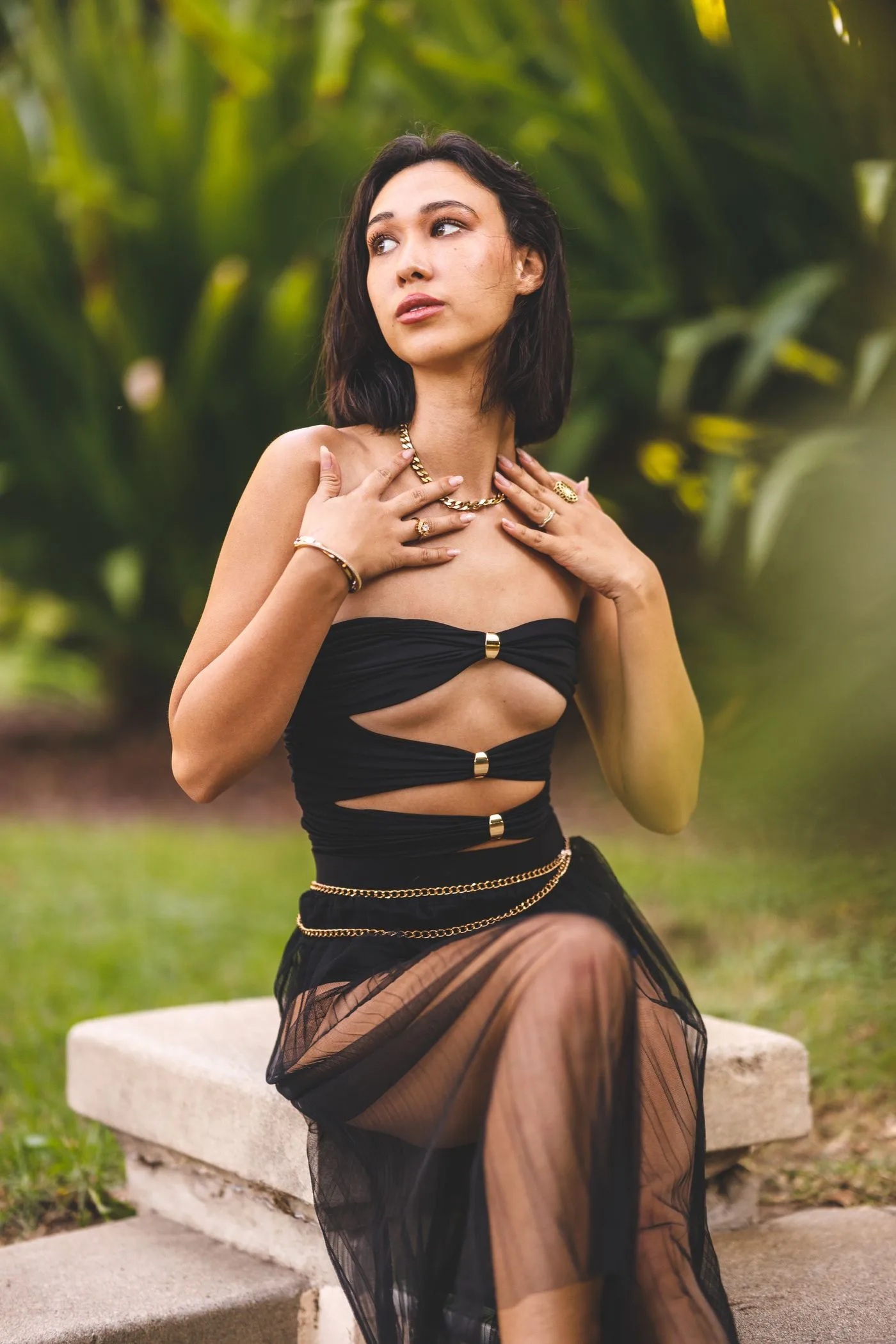
A cutout dress can have a clearly chosen silhouette while the layer worn with it remains an afterthought. Review the actual garments before the occasion, including what happens when the outer piece comes off. A useful pairing respects the dress’s intended construction and your own comfort. It does not require an improvised attachment or a new shopping group to make the outfit feel complete.
Review the dress independently
Read relevant product information and inspect accessible closures through appropriate handling. Choose the intended wearing arrangement rather than forcing a feature into a shape borrowed from another garment. Keep any unfinished task outside the ready-to-wear decision.
Try the dress in a suitable space and consider gentle ordinary sitting and standing. The base outfit should have an understood role on its own. A layer should not be required to remain closed throughout an event to conceal an unresolved decision beneath it.
Start with an existing suitable layer
Choose a familiar garment appropriate to the actual activity and your preference. Read its guidance and observe the shoulder, sleeve and opening relationship. A colour match does not establish that the pieces fit together comfortably.
Keep the dress’s edges and fastenings within their intended roles. Do not pin or attach unrelated parts merely to reproduce a still photograph. Seek appropriate clarification where an unfamiliar construction detail leaves a relevant question unanswered.
Review the visible arrangement
Look at the complete outfit from an ordinary distance in suitable light. Decide how much of the dress you want the layer to show. Personal preference can guide that choice without becoming a universal rule about cutout clothing.
Keep materials and care information tied to the actual products. A dark surface in a photograph does not establish composition or intended handling. Preserve uncertainty instead of allowing visual similarity to transfer instructions between garments.
Include belongings and transitions
Add the intended bag with ordinary contents within guidance. A strap may occupy space that looked clear before carrying anything. Take the layer off and return it in a realistic sequence, giving it an appropriate temporary place.
If the arrangement repeatedly needs correction, compare another existing layer or a different outfit for the activity. Clothing can have limited useful roles without needing to serve every possible occasion. A modest alternative can keep the decision comfortable and realistic.
Preserve the useful option
Record the actual dress, layer and intended opening if the combination helped. Keep a relevant limitation specific to those garments. Another cutout shape or sleeve construction can deserve an independent review rather than inheriting the same answer.
After wearing, follow the appropriate care and storage guidance for each item. A considered layer choice allows the dress to participate in a complete occasion outfit while keeping ordinary movement, real belongings and personal preference central beyond the initial styled view.
Continue planning with Choose an Occasion Outfit With a Second Life, The Wrap-Dress Movement Check before an Invitation.
Notes & further reading
Our styling suggestions are editorial guidance. Check the merchant’s size chart, fabric composition, care instructions and returns policy before buying.