Some links on Girl Wonder Life are affiliate links. We may earn a commission if you buy through them, at no extra cost to you. Recommendations are editorial guidance, not claims of hands-on testing. Read our disclosure.
A visible collar can finish a simple knit outfit, but the shirt, sweater and coat share limited space around the neck. Begin with comfort and decide which layer should be seen clearly. You do not need a necklace or scarf in the same area merely because they work with the individual garments. A small collar detail is most useful when it stays easy through turning, sitting and ordinary movement.
Put the shirt on normally
Fasten the shirt at the point you actually find comfortable and check the neck without the sweater. If it rubs, pulls or sits awkwardly already, another layer is unlikely to solve it. Compare collar size and softness rather than trying to press an unsuitable shape into place. The shirt's fit across the back can also affect the neckline when you reach forward.
Compare the sweater openings
A close crew neck leaves less room than a V-neck or open cardigan. Try the actual combinations and let the collar settle rather than holding it where you hope it will stay. Check front and side, turn the head and look down. Collar points can sit inside, outside or partly beneath the knit according to construction and preference. Choose the arrangement that survives movement without pressure or repeated correction.
Keep the shirt body from bunching
A full shirt beneath a fine close sweater can push fabric upward, disturbing the neckline even if the collar itself is small. Try a smoother or less voluminous shirt where available. Check sleeves and waist at the same time. A modest tuck may help some combinations, but a tight waistband that traps a large amount of cloth creates a new discomfort. The layers should have enough room to move as clothing, rather than being held in place by tension.
Add the coat before accessories
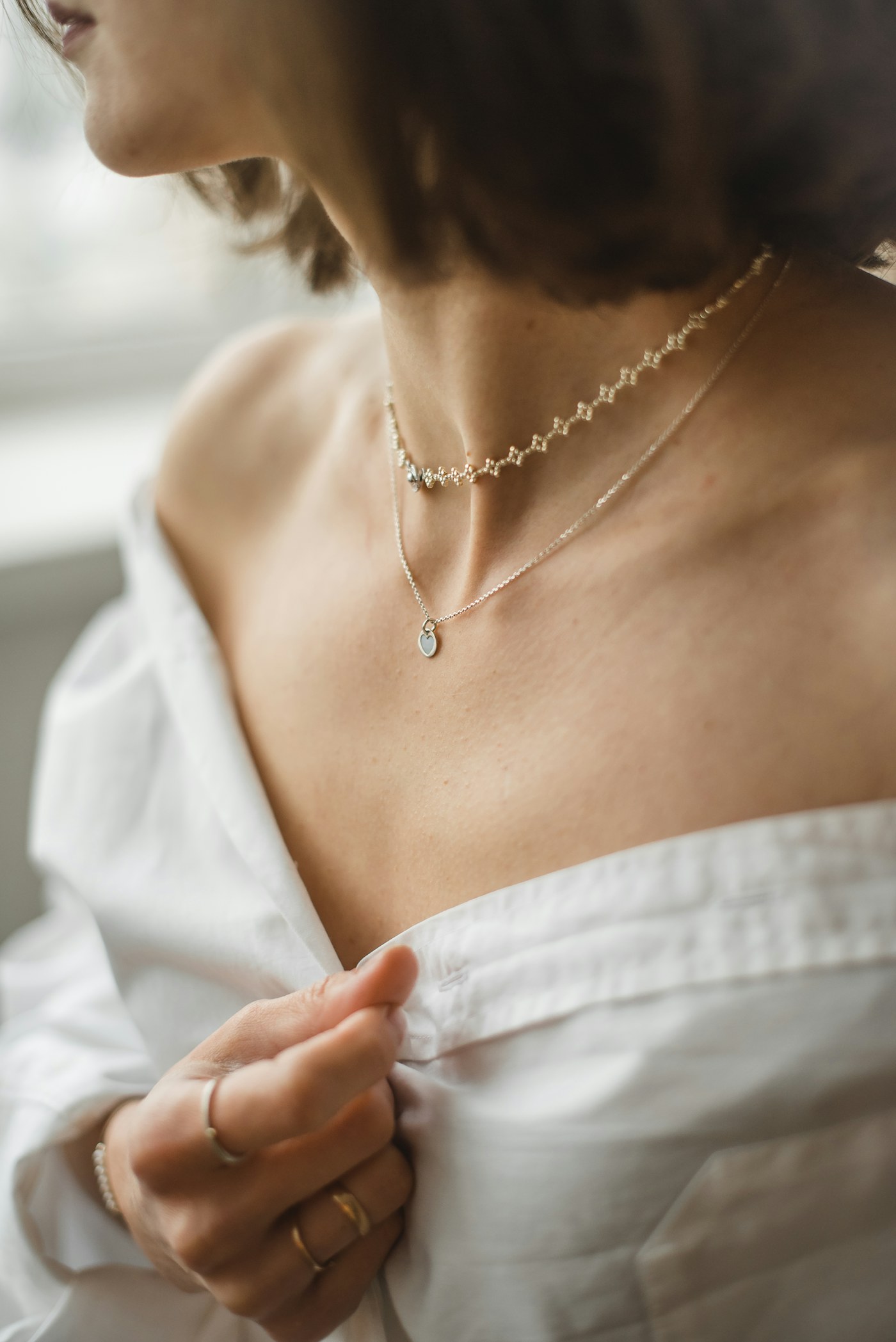
Fasten the outer layer and check where its collar meets the shirt and knit. If there is already a strong collar, a scarf may be more comfortable removed indoors or used with a simpler inner layer. Look at bag-strap contact too. A necklace is optional; a decorative collar may already provide enough detail. Try fewer elements before deciding that the outfit needs another finishing purchase.
If a collar point keeps folding
Observe whether it happens when sitting, reaching or adding the coat. Change one variable, such as a wider knit opening or softer shirt collar. Do not assume stronger starch, higher ironing heat or hidden improvised pins are suitable fixes for every fabric. If the pairing remains demanding during a short trial, use the shirt or sweater with another companion rather than making the whole day a collar-adjustment routine.
Must the cuffs show as well?
No. They can echo the shirt layer, but sleeve comfort takes priority. Check that the inner cuff does not crowd the wrist or catch beneath a jacket. Unfasten the shirt properly before removal and follow fabric-specific pressing guidance. A reliable collar arrangement is a small repeatable detail, not a requirement to display every edge of the shirt at once.
Related reading
Continue with Buying Knitwear: Look Beyond the First Soft Touch and Choose a White Shirt You Will Actually Want to Wear. These existing guides provide a broader starting point for the related wardrobe, home or planning decision.
Notes & further reading
Our styling suggestions are editorial guidance. Check the merchant’s size chart, fabric composition, care instructions and returns policy before buying.