Some links on Girl Wonder Life are affiliate links. We may earn a commission if you buy through them, at no extra cost to you. Recommendations are editorial guidance, not claims of hands-on testing. Read our disclosure.
A spring morning can make a coat feel essential, then leave you carrying it by lunchtime. The answer is usually a more useful relationship between your clothes rather than another jacket. Think about the temperature changes within your actual day: the walk outside, a warm train, an air-conditioned office and a late trip home. Layers should let you respond to those changes without losing the shape or comfort of your outfit.
Begin with the outfit underneath
Put together a complete base outfit before adding outerwear. Straight trousers and a comfortable top, or a dress with shoes suitable for your plans, should work on their own. If the coat hides a top you dislike wearing alone, you may keep an unnecessary layer on all afternoon. Choose a neckline, sleeve and fit that feel finished without depending on the jacket to solve everything.
Try the base outfit while sitting and reaching. A spring layer often comes off in a cafe or at a desk, where comfort matters more than a standing mirror view. Notice whether a tucked shirt pulls or a waistband becomes tight. Fix those details before choosing accessories. The most successful layering formula remains useful through ordinary movement and changes in temperature.
Give each layer a different job
A thin shirt can add coverage, a knit can add warmth and a coat can provide the outer shape. You do not automatically need all three. Select the number of pieces around your climate and routine. If you will carry a removed layer, choose one that fits your bag or folds comfortably over an arm. Test that arrangement with the things already inside your bag.
For a simple starting point, combine a cotton top, a light cardigan and an easy coat with jeans or trousers. Change one layer if the day looks warmer. Leave enough room at the shoulders and sleeves for everything to sit comfortably. A coat that fits over a sleeveless top may pull over a knit; try the whole combination before assuming your usual size will work.
Use color to connect different weights
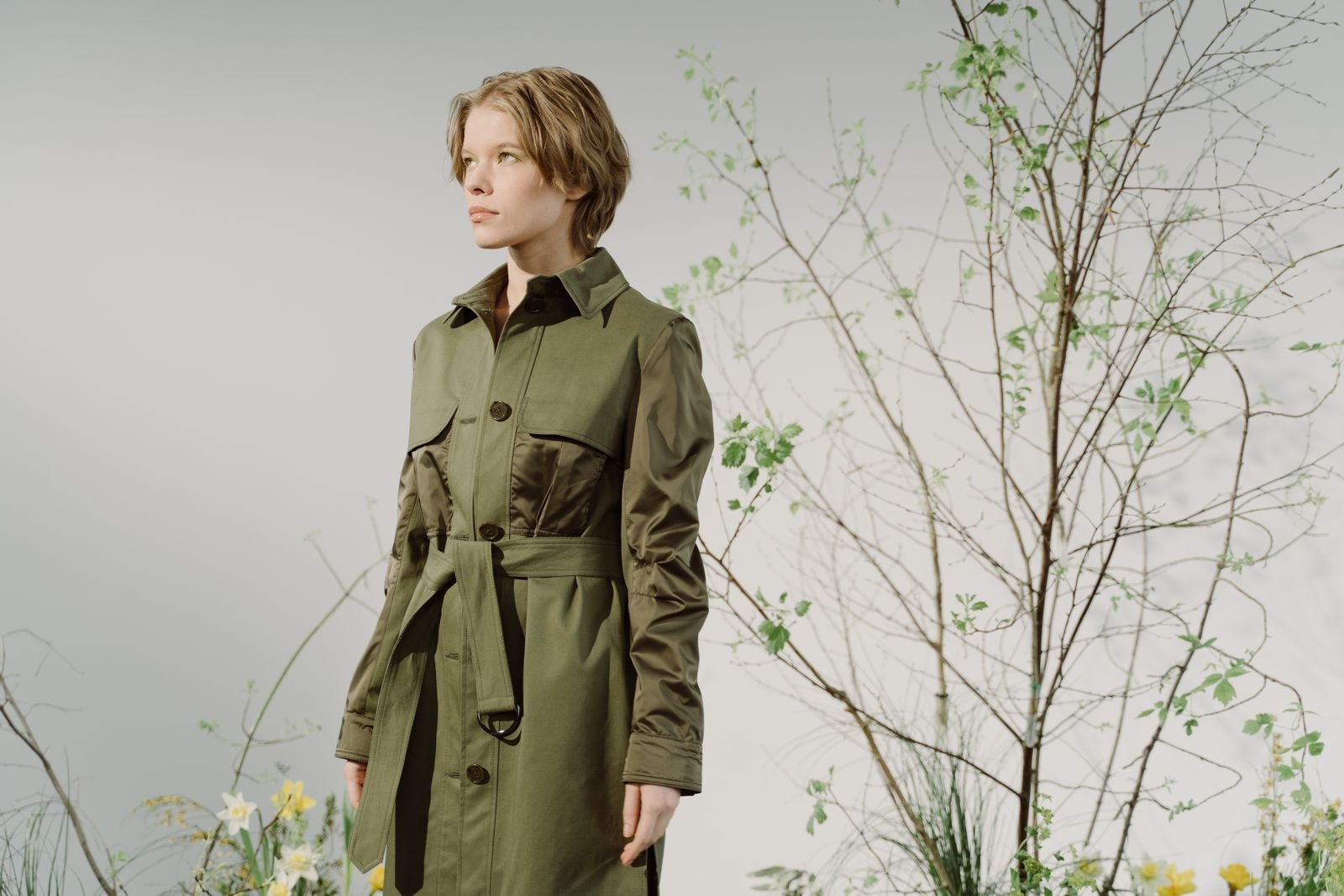
Repeating a color helps an outfit remain coherent when one layer disappears. A green coat might work with cream, denim and brown, but your own wardrobe offers the best guide. Lay the layers beside each other and remove them one at a time. Each version should feel like something you would choose to wear. There is no requirement to use pale colors simply because the calendar says spring.
Texture can provide enough interest without several competing prints. A smooth shirt beneath a soft knit creates a gentle contrast. If you enjoy pattern, place it on a piece that remains visible through different versions of the outfit. A scarf can be expressive, but consider whether you want to carry it once the day warms up. Decoration is more useful when it suits your movements.
Buy for the repeated gap
Before shopping, identify which adjustment is consistently missing. Perhaps your only coat is too heavy, or your light knit cannot fit beneath your regular jacket. Search for that particular connection. Check measurements, fabric composition, care instructions and returns. Try a prospective purchase with two existing outfits rather than judging it only beside the retailer's suggested pieces.
Inspect closures and pockets as well as the silhouette. Can you fasten the coat over your layers? Do the pockets comfortably hold what you actually put in them? Does a cardigan button without pulling? These practical questions make comparisons more useful than vague descriptions such as versatile or essential. A layer earns that description by working with your clothes and your routine.
A quick rehearsal before leaving
Wear the complete outfit indoors, then remove the outer layer and walk around. Choose shoes for the longest stretch of your day. Check the forecast shortly before leaving and adjust coverage as needed; a pretty light coat should not be assumed to provide weather protection. Save a photograph of a combination that works so the next changeable morning needs fewer decisions.
Frequently asked questions
Must spring layers be lightweight? Choose their weight around your conditions. Spring can still be cold, and a calendar does not determine your comfort.
How many layers are enough? Use the smallest number that gives you useful adjustments. More pieces can create extra bulk without improving the outfit.
Notes & further reading
Our styling suggestions are editorial guidance. Check the merchant’s size chart, fabric composition, care instructions and returns policy before buying.