Some links on Girl Wonder Life are affiliate links. We may earn a commission if you buy through them, at no extra cost to you. Recommendations are editorial guidance, not claims of hands-on testing. Read our disclosure.
An animal-print coat can supply most of an outfit's visual detail on its own. The pattern occupies a large moving area, so the clothes and accessories around it do not all need another strong feature. Begin with quiet familiar partners and read the coat in ordinary wear. This makes it easier to decide which additional details are useful, rather than collecting a complete themed group around one patterned garment.
Look at the whole patterned area
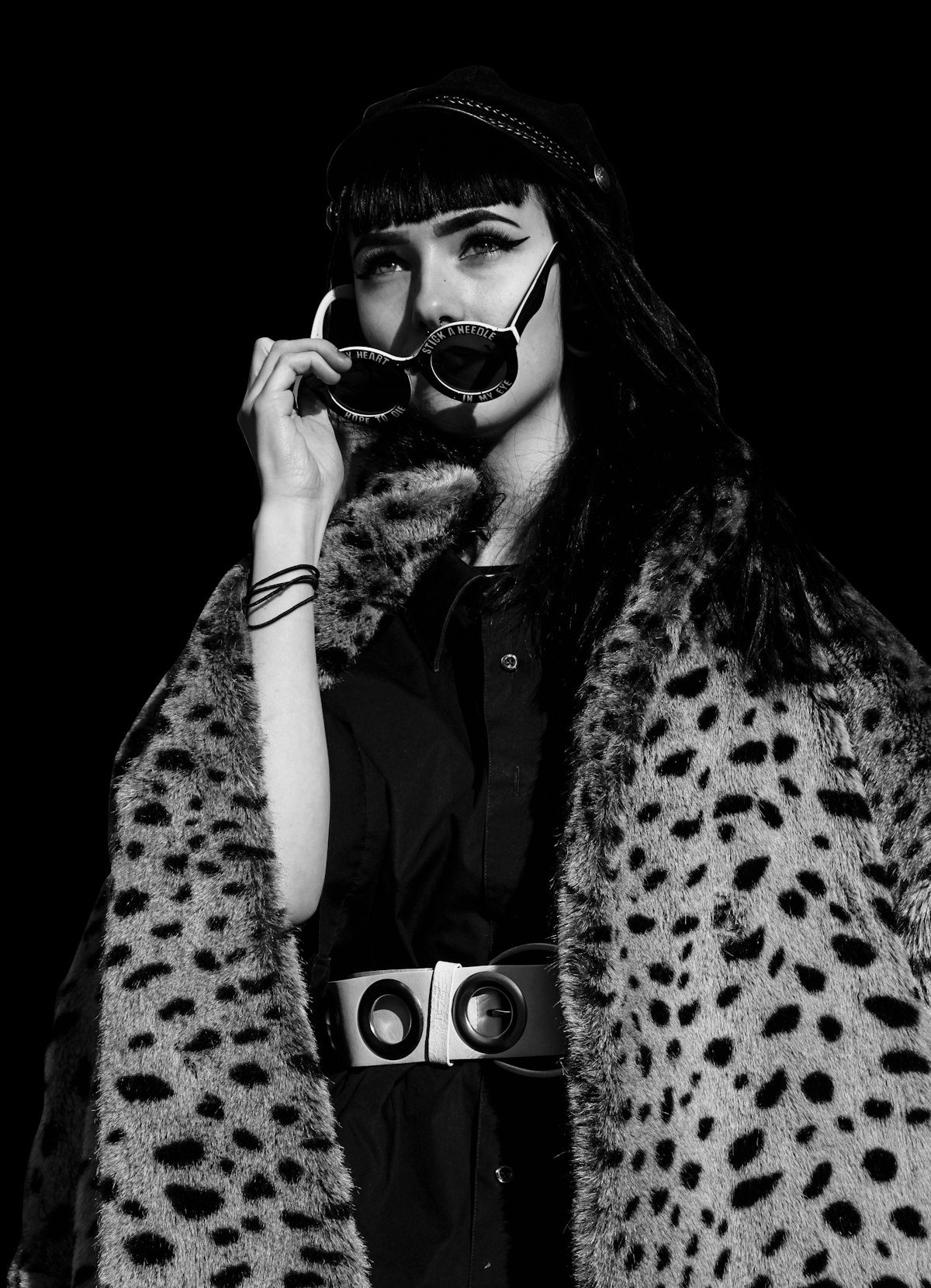
Put the coat in its normal open or fastened arrangement. Notice how much of the print is visible across the front and sleeves. A close portrait can make the pattern appear denser than it does in a full outfit, while an open front can reveal a substantial plain centre.
Use the actual coat for colour decisions. A monochrome inspiration photograph can explain contrast and shape, but it cannot establish the garment's real shades. Keep any material or care questions connected to the particular item as well.
Begin with a clear inner group
Choose a top and lower garment that already work together. Quiet does not have to mean identical dark pieces; it means the inner group has a settled role without several competing prints or embellishments.
Look at the neckline framed by the coat. A simple edge can give the eye a calm place near the face. If jewellery is wanted, compare a familiar piece after seeing the plain version, so its contribution is a conscious choice.
Give headwear a practical role
If a hat belongs to the day, add the actual one and look at its shape beside the coat collar. A broad brim, a compact cap and no hat create different upper outlines. There is no need to buy headwear simply because a styled photograph includes it.
Include any sunglasses normally needed. Several accessories near the face can create a concentrated group of detail even when each one is individually plain. Decide whether that concentration suits the intended outfit rather than assuming every photographed element must be repeated.
Finish with ordinary carrying and footwear
Use a bag appropriate to the outing and carry it normally. A quiet bag can leave the coat as the main patterned area. A more noticeable bag can work too, but it changes the balance and deserves its own clear reason.
Check the whole outfit with suitable familiar shoes. Avoid choosing footwear solely because one small part of its pattern seems to match the coat; the full shoe shape matters as well.
Keep a reference if the combination is useful, noting which quiet partners supported the coat. The result can be expressive without being crowded. Letting one large patterned area lead is a complete styling decision, not an unfinished outfit waiting for several more statement pieces.
Related reading
Two Patterns, One Colour Link and a Clear Difference in Scale, A Red Coat over the Dark Base Already Owned.
Notes & further reading
Our styling suggestions are editorial guidance. Check the merchant’s size chart, fabric composition, care instructions and returns policy before buying.