Some links on Girl Wonder Life are affiliate links. We may earn a commission if you buy through them, at no extra cost to you. Recommendations are editorial guidance, not claims of hands-on testing. Read our disclosure.
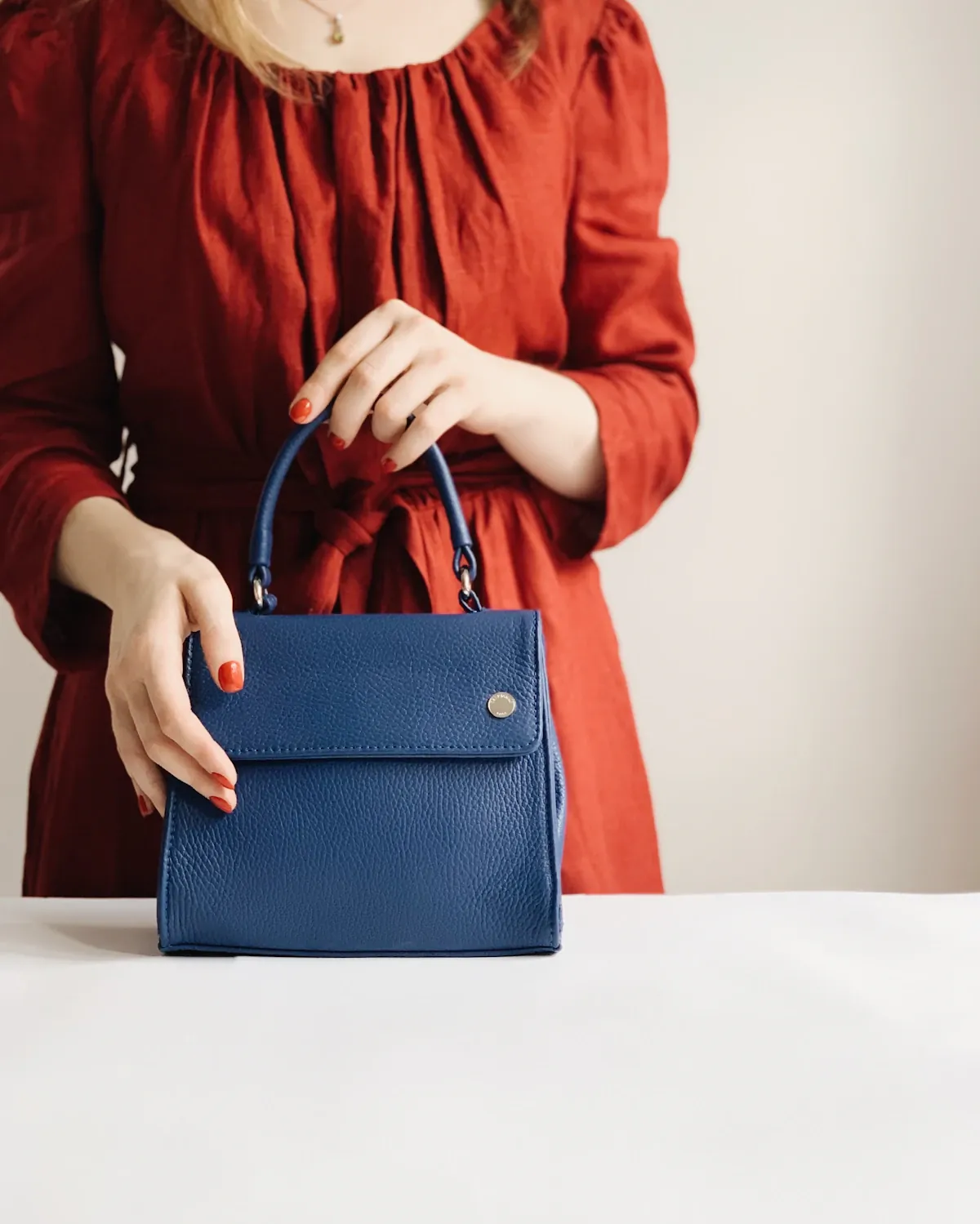
A blue bag can lead the color in an outfit while a familiar plain blouse remains a quieter neighbor. Begin with the actual clothes and the bag's ordinary carrying role. A structured blue shape held in front of the torso can look dominant in a close image, while normal use may place it lower or beside another garment. Understanding that scale is more useful than automatically buying another blue accessory.
Give quiet a specific meaning
Choose the actual blouse and identify why it is visually restrained in this outfit. It may have a plain surface, a muted color or a simple neckline. Quiet does not always mean pale, and a bright plain blouse can create a different relationship from a patterned one.
Keep the lower garment and footwear familiar for the first review. This gives the bag a clear role as the main changing element rather than surrounding it with several new choices that obscure its contribution.
Use the bag as intended
Carry it with an appropriate ordinary load and observe where the body and handles meet the clothing. A handheld position beside the lower garment differs from holding it forward in a product-style pose.
Keep practical scope and condition separate from appearance. A blue surface in a photograph does not establish material, capacity or readiness. Those facts belong to the actual item, beyond the limited visual comparison of color and shape.
Read the full outline
Look at the outfit from a normal distance before focusing on the accessory. The blue may appear as a modest accent or a broad central area depending on its size. A tight crop can exaggerate its importance by excluding most of the clothes.
Notice whether the blouse's sleeves repeat a quieter color near the handle. That small boundary can make the bag clearer without another accessory being added. The garment's own structure already contributes several visible edges.
Keep color repetition optional
Leave the shoes and jewelry steady while reviewing the first version. A blue shoe or scarf expands the theme into another area, which may be enjoyable but is a different experiment.
If a suitable owned object repeats a neighboring blue, compare it separately rather than expecting an exact match. Screen images can shift shade, and similar color names do not guarantee identical appearance. Use the actual possessions as the local reference.
Save one clear role
Record the bag and blouse identities with a concise reason for the pairing. The blue shape remains distinct beside the plain top is enough. This makes the combination retrievable without turning it into a universal rule for every blue accessory.
The bag can retain its practical job and contribute one deliberate color area. A familiar blouse provides a quieter background, leaving further matching purchases as decisions about real roles rather than the assumed completion of a small outfit idea already available in the wardrobe.
Related reading
An Everyday Handbag With a Clear Job, A Small Structured Bag with a Deliberately Light Load.
Notes & further reading
Our styling suggestions are editorial guidance. Check the merchant’s size chart, fabric composition, care instructions and returns policy before buying.