Some links on Girl Wonder Life are affiliate links. We may earn a commission if you buy through them, at no extra cost to you. Recommendations are editorial guidance, not claims of hands-on testing. Read our disclosure.
A handbag is easy to admire empty and harder to judge during a busy day. It may need to hold a book, survive a crowded commute, fit beside a chair and let you find a key without unpacking everything. Choosing an everyday bag begins with those ordinary tasks. Shape and color still matter, but they become more useful decisions when you know what the bag needs to carry and how you prefer to move.
Start with your real contents
Lay out the things you carry on a normal day. Separate essentials from objects that have stayed in an old bag through habit. Check the dimensions of anything rigid, such as a notebook or glasses case. A bag can look spacious while an opening or internal divider prevents a particular item from fitting. Compare the usable interior rather than relying only on the external measurements.
If some days require a computer and others do not, consider whether one larger bag genuinely suits both. It may be sensible to keep a work bag and a smaller everyday option. Equally, one flexible design may be enough. Choose around the pattern you actually repeat instead of a general idea that every handbag should accommodate every possible situation.
Consider how you carry it
A shoulder strap, top handle and crossbody strap offer different experiences. Think about whether you need both hands for shopping, an umbrella or a rail on public transport. Try the bag over the coat you regularly wear. A strap that feels roomy with a light blouse may sit awkwardly over winter layers. Adjustable does not necessarily mean the available range will suit your preferred position.
Where the retailer allows it, test the bag with a realistic load. Notice the total weight and whether a strap presses uncomfortably. Check that a removable strap attaches securely and that a handle remains comfortable when the bag is full. An attractive structure can become inconvenient if you must carry it in one exact way all day. Your routine should guide the construction.
Check access and closure
Open and close the bag as you normally would while standing. Do you need two hands to operate a clasp? Can you locate your phone without disturbing other contents? A zip, flap or open top may each suit different habits. Decide which tradeoff feels reasonable for your setting rather than treating a particular closure as the only acceptable choice.
Look inside for useful organization. One pocket may help separate keys; too many small compartments can reduce flexibility. Consider whether a removable pouch already owned could provide the organization you need. You do not necessarily need a new bag to solve a messy interior. Avoid buying a complicated arrangement if your usual objects will not fit its designated spaces.
Connect it to your wardrobe
Try the bag with a work outfit, a casual combination and an outer layer. Pay attention to scale as well as color. A compact shape may give a roomy coat a deliberate contrast, while a larger bag may feel more natural with your daily load. These are visual choices rather than rules about body size or which people should carry a certain shape.
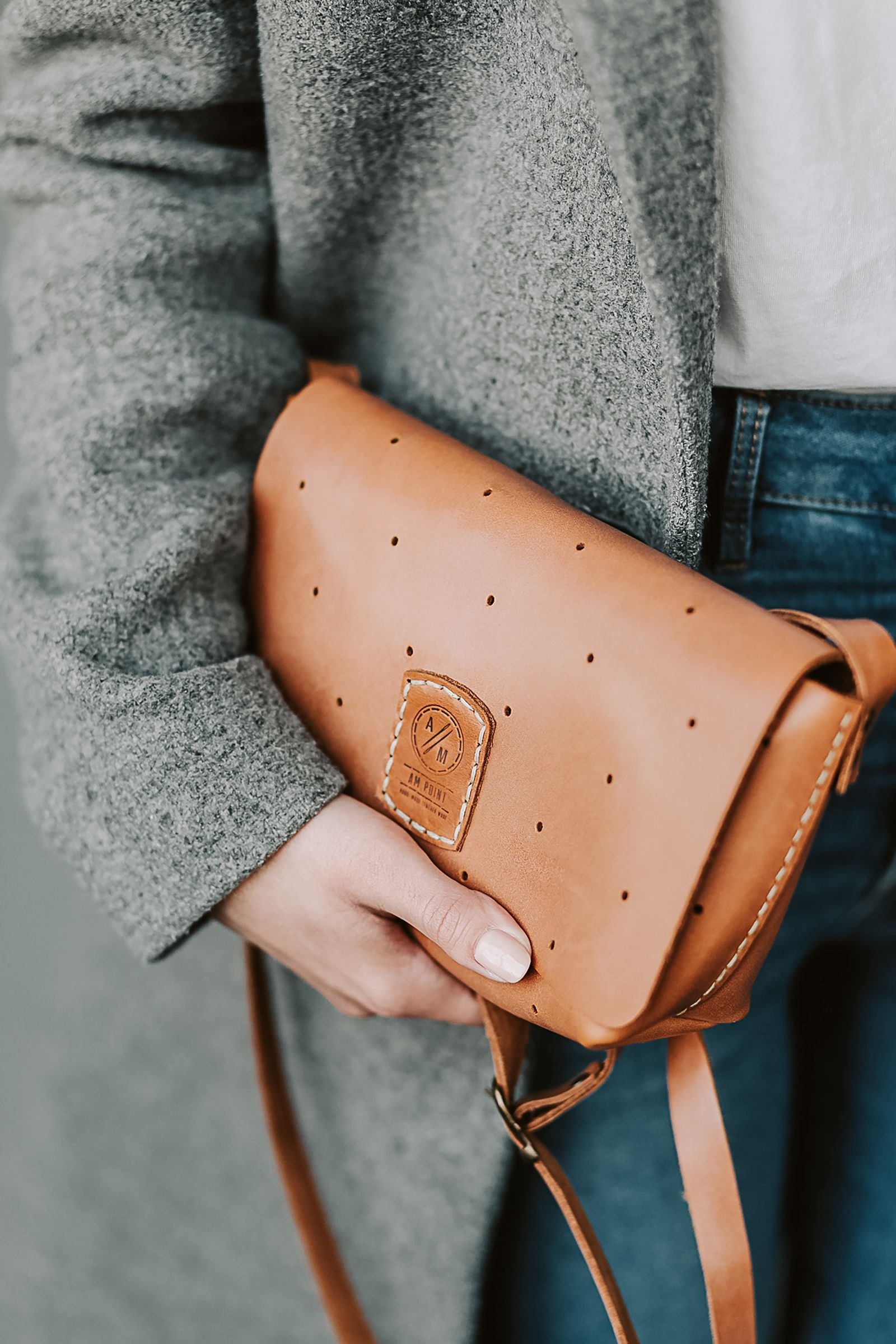
For color, look for a repeated relationship with your existing clothes. Tan can connect warm neutrals, a dark bag can settle a bright outfit, and an expressive color can become the main detail. Exact matching with shoes is optional. If you choose contrast, keep enough of the outfit familiar that you can imagine using the bag on an ordinary morning.
Inspect before committing
Read the materials and care instructions. Examine stitching, lining attachment, hardware movement and the base. Check whether the bag stands only when arranged for display or remains usable when loaded. Ask about repair options if they matter to your purchase. A broad claim about quality means less than information about the construction and the support available for that particular product.
Review the return terms before removing tags. At home, transfer your essentials and try the bag with the clothes you expected it to suit. If access feels awkward repeatedly, take that seriously. A daily bag should simplify familiar routines, and a beautiful detail does not compensate for a persistent practical frustration.
Frequently asked questions
Is a larger bag more versatile? Only when you need its capacity and enjoy carrying it.
How many everyday bags do I need? Enough to cover your actual activities. There is no useful universal number, and a reliable existing bag deserves consideration before another purchase.
Notes & further reading
Our styling suggestions are editorial guidance. Check the merchant’s size chart, fabric composition, care instructions and returns policy before buying.