Some links on Girl Wonder Life are affiliate links. We may earn a commission if you buy through them, at no extra cost to you. Recommendations are editorial guidance, not claims of hands-on testing. Read our disclosure.
A necklace can appear to sit at an appealing point in a photograph while the stated measurement describes something less obvious. The number might refer to a chain, an adjustable range or another defined part. Before comparing it with a neckline, preserve the source's measuring basis. A precise figure is useful only when it describes the feature you think it does, and a model image cannot supply the missing definition.
Identify the selected piece
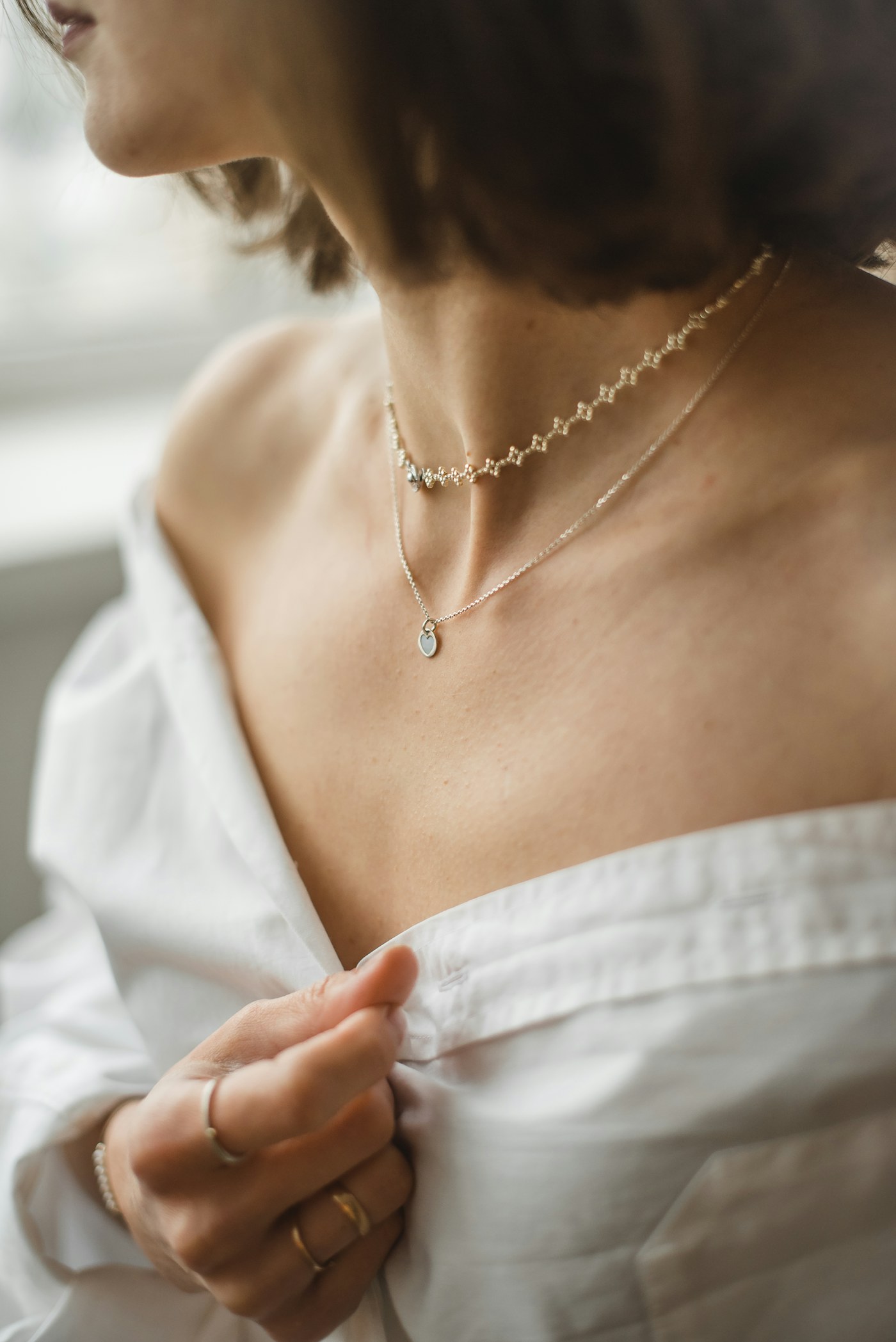
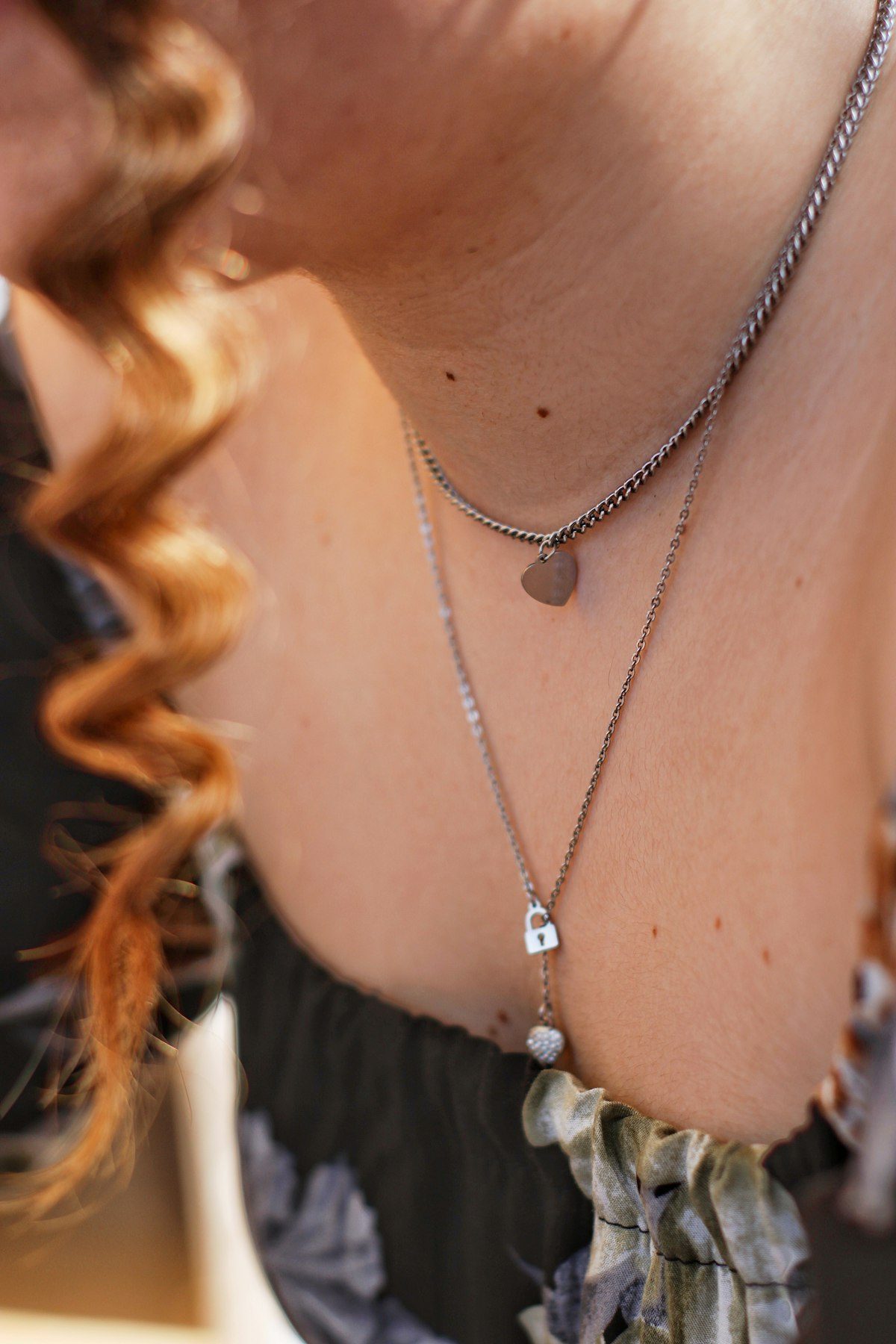
Keep the product, option and relevant component description together. A layered image may show several separate necklaces or one defined set. Do not assume that every visible chain belongs to the purchase or shares one measurement.
Use the actual product information for materials and construction. A close image can reveal the visible arrangement without establishing every technical claim. Missing information should stay a question rather than be supplied from the appearance of a similar piece.
Read what the number measures
Look for the source's explanation of length and any adjustable range. Keep those labels beside the figures. A pendant's dimensions are not automatically part of a chain length, and a maximum adjustment does not necessarily describe every ordinary wearing position.
If the measuring point is unclear, ask about that exact ambiguity. Do not calculate a new specification from the apparent proportions in the product image. The size of a photographed hand or body is not a reliable substitute for the actual stated method.
Keep supplied parts in view
An extender or detachable component may be included, optional or shown with another version. Establish its place in the selected offer before treating the longest imagined configuration as available. A visible attachment point does not prove compatibility with an unrelated spare part.
Follow the actual use and care information. Do not improvise a fastening change to reproduce a preferred line in a picture. A practical uncertainty may need an appropriate qualified answer about the real piece.
Compare with one owned neckline
Once the specification is understood, consider the necklace with the actual top it would serve. A quiet neckline and a detailed one create different visual relationships. Keep the clothes steady while comparing another candidate so the jewellery question remains clear.
A photograph can support that visual note without establishing comfort or suitability for every wearer. Body proportions and the wearing state affect the visible result. Avoid promising an exact position from a product number alone.
Save the complete reference
Record the selected option, labelled length information and unresolved question with the shortlist. If the necklace is a gift, use the recipient's expressed preference rather than assuming one measurement suits them. A clear necklace comparison connects the actual object with a real outfit, leaving the image as illustration and the measurement as a correctly understood piece of information rather than a guarantee of the whole wearing experience.
Related reading
A Pendant That Does Not Disappear into the Neckline, Jewelry Layers That Feel Easy to Wear.
Notes & further reading
Our styling suggestions are editorial guidance. Check the merchant’s size chart, fabric composition, care instructions and returns policy before buying.