Some links on Girl Wonder Life are affiliate links. We may earn a commission if you buy through them, at no extra cost to you. Recommendations are editorial guidance, not claims of hands-on testing. Read our disclosure.
A scarf may be comfortable outside and inconvenient to remove once the room is warm. If it is caught beneath a collar, necklace and bag strap, taking it off can disturb the whole outfit. Test removal as part of the styling choice. The useful arrangement supports the temperature change and leaves a complete base behind, rather than treating the starting outdoor view as the only version of the day that matters.
Decide what the scarf does
Choose whether it is mainly decorative, intended for warmth or serving another specific role. Read material and care information. A light scarf and a thick knit require different handling and storage space. Select appropriate clothing for conditions rather than assuming any scarf supplies the same protection. If it will be carried for much of the day, include that practical role in the initial choice.
Start with the neckline underneath
Wear the top and coat as intended and check the collar's comfortable position. Add the scarf simply before experimenting with more turns or knots. Turn the head and sit. A crowded neckline may need another companion rather than a tighter arrangement. The indoor top should remain comfortable and complete after the scarf comes away, without requiring it permanently to cover a neckline you do not enjoy.
Try the actual removal sequence
In a safe setting, take off the bag or outer layer in the order you expect to use. Then remove the scarf. Notice catches, pressure or several accessories moving together. A simpler drape may be more useful than a complex knot for a day of repeated temperature changes. Follow the item's intended use and keep loose ends clear of relevant hazards rather than relying on improvised fastenings.
Check jewellery and straps
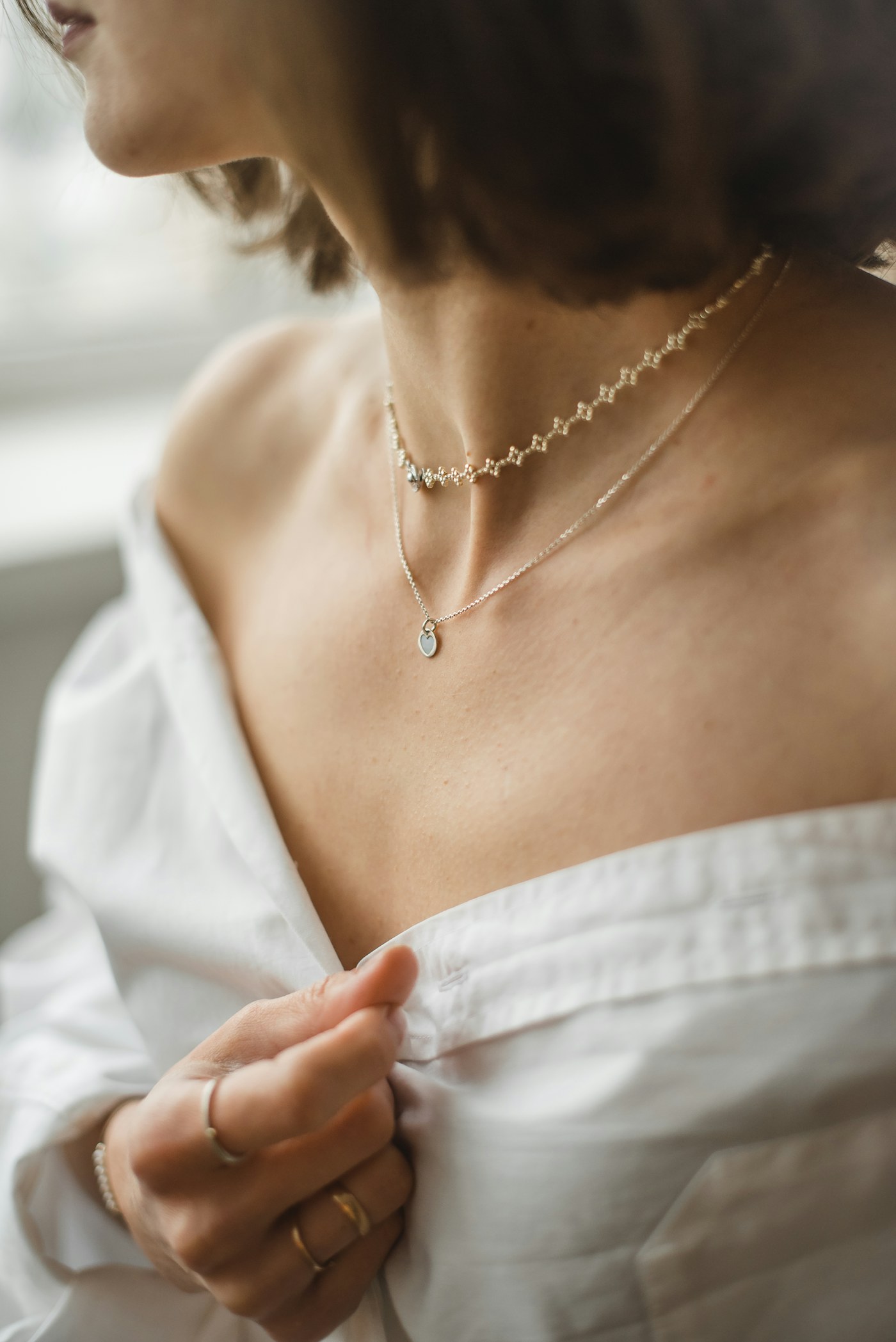
A necklace or earring can catch delicate fabric, and a shoulder strap can trap a scarf against the coat. Try the real accessories at a realistic bag load. Remove one unnecessary detail before adding another object to hold the arrangement in place. Exact colour coordination is optional. The scarf already supplies texture or pattern, so the outfit does not need every neckline accessory at once.
Give the removed scarf a suitable place
Fold or store it appropriately for the material and keep it protected from unsuitable contact. Check that the bag has practical room without being overfilled. A bulky scarf can displace essentials or become awkward to carry. Save it for another outing when needed rather than forcing a small bag to accommodate it. Do not leave it trailing from an insecure position merely to preserve the rest of the packing arrangement.
Does a useful scarf need to be easy to tie?
It needs to be manageable for its actual role. An elaborate arrangement can suit an occasion when removal is limited, while a simpler one can serve ordinary transitions. Choose knowingly. The successful setup remains comfortable outdoors and easy to change indoors, with a complete outfit after removal and a suitable place for the scarf until it is needed again.
Related reading
A Scarf That Earns Its Wardrobe Space, A Visible Shirt Collar without a Crowded Neckline.
Notes & further reading
Our styling suggestions are editorial guidance. Check the merchant’s size chart, fabric composition, care instructions and returns policy before buying.