Some links on Girl Wonder Life are affiliate links. We may earn a commission if you buy through them, at no extra cost to you. Recommendations are editorial guidance, not claims of hands-on testing. Read our disclosure.
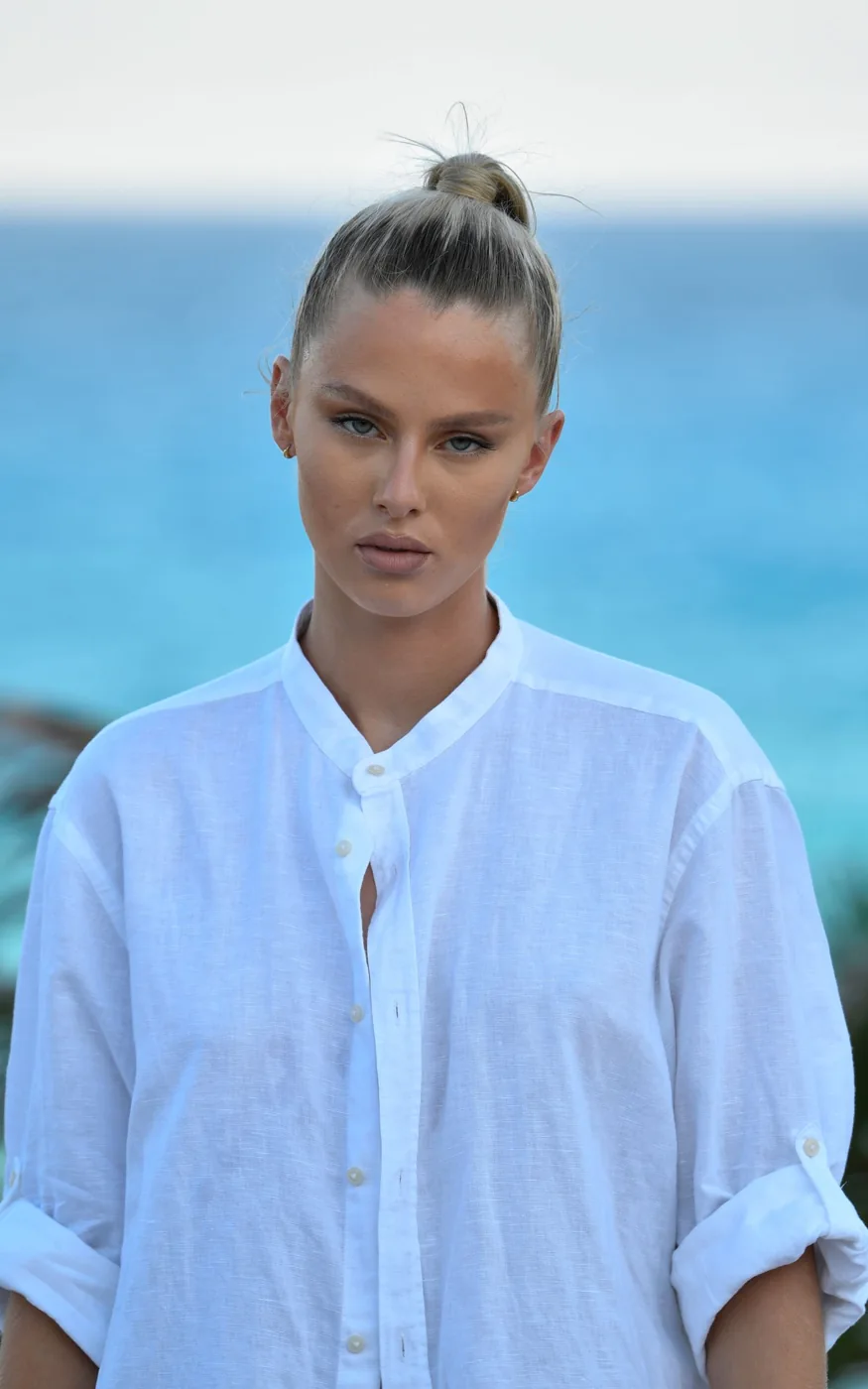
Two pale shirts can look similar in a small product image while having different collar constructions. A band collar, pointed collar and another stated design create distinct shapes near the face. Read the actual description before treating a front photograph as complete information. The comparison is useful when it preserves the exact candidate rather than borrowing details from another shirt that happens to share a color or setting.
Identify the actual version
Keep the product title, relevant variant and listing reference together. A shop may show several related shirts or alternate images within a collection. The collar question should remain attached to the specific garment being considered.
Do not use color alone as an identifier. Pale fabric beside the sea can appear in many unrelated photographs. An illustrative image supplies a visible idea, not the construction details of another product.
Read the collar language supplied
Preserve the description at the scope actually stated. If the source names a band collar or another design, keep that wording with the candidate. Do not extend it into assumptions about every part of the neckline or fastening.
If the information remains unclear, retain the question. A front image partly obscured by hair or a pose cannot reliably settle every edge. Another similar shirt is not evidence for the missing construction of this one.
Compare the ordinary fastening views
Look at available images showing how the neckline appears in supported normal arrangements. A higher fastening and a more open version can create different visible shapes without changing the collar's actual design.
Recognize where the image is incomplete. A collar held aside or hidden beneath another layer may show atmosphere rather than the detail needed for a purchase comparison. Keep missing information visible instead of filling it from a familiar wardrobe item.
Connect the collar to an owned outfit role
Name the actual jacket, knit or base combination the shirt would join. A low-profile collar may serve one layering idea, while a pointed one creates another boundary. The useful difference belongs to those real partners, not a universal claim that one design is better.
Keep fit, composition and care as separate product questions. A clear neckline image cannot establish all of them. Read actual supplied information rather than allowing a pleasing collar shape to stand in for the whole garment's suitability.
Ask one focused question if needed
Identify the exact missing detail through the appropriate product channel. A request for a clear view of the fastened collar gives more direction than asking whether the shirt is suitable for everything. Preserve relevant replies with the listing.
The candidate can remain on the shortlist or be removed when its role is unclear. Reading beyond the front photograph lets the collar contribute a specific reason to consider the shirt, while the final decision follows the actual garment rather than the construction of a similar pale piece remembered from another image.
Related reading
Choose a White Shirt You Will Actually Want to Wear, A Visible Shirt Collar without a Crowded Neckline.
Notes & further reading
Our styling suggestions are editorial guidance. Check the merchant’s size chart, fabric composition, care instructions and returns policy before buying.