Some links on Girl Wonder Life are affiliate links. We may earn a commission if you buy through them, at no extra cost to you. Recommendations are editorial guidance, not claims of hands-on testing. Read our disclosure.
Trousers can look promising for a moment and become frustrating as soon as you sit down. A useful fitting goes beyond the waistband and standing front view. Consider the rise, room through the seat and thighs, leg shape and length with your actual shoes. These are questions about the garment, not a judgment of your body. A different cut may be more useful than forcing yourself to accept a poor match.
Choose the job first
Office trousers, relaxed weekend styles and occasion trousers may need different levels of structure. Decide when you will wear the pair and what tops belong with it. A wide leg can create a shape you enjoy but require a different length or layer from a tapered pair. Start with the intended silhouette instead of assuming one cut is universally flattering or more sophisticated than another.
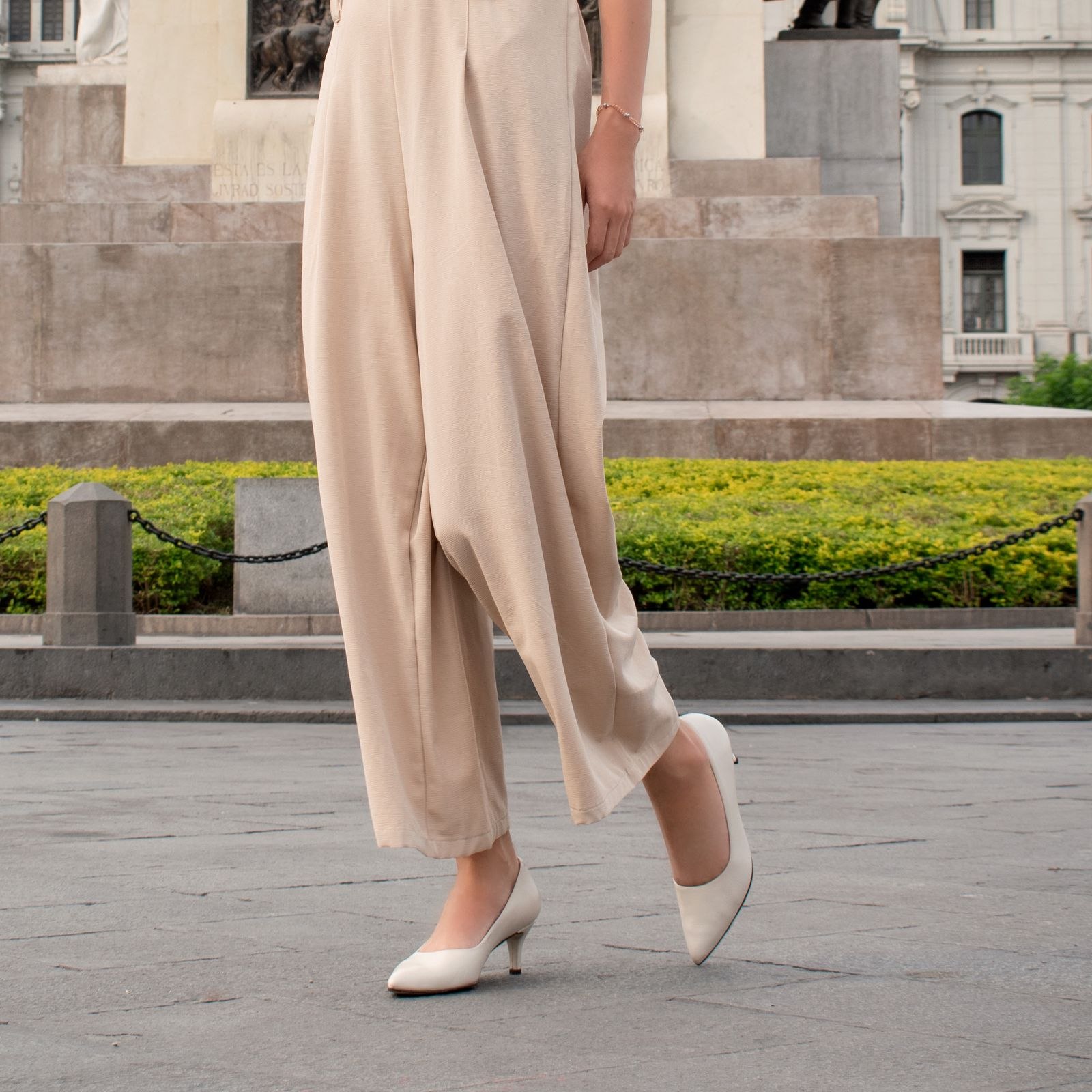
Bring the likely shoes into the fitting process. If the trousers are intended for everyday flats, evaluate them with flats rather than only with a heel supplied for styling. If you expect to wear several shoe heights, decide which one matters most. A single hem may not work equally with every option. It is reasonable to give a pair a specific role rather than demand total adaptability.
Check the waistband seated
Fasten the trousers normally, then sit for a few minutes. Notice pressure, gaping and whether you feel the need to adjust them. Walk and bend comfortably. A waistband that works only while standing may not suit a desk day. Try another size or cut and compare the complete fit rather than choosing by the smallest number that closes. Labels are a reference, not a verdict.
Look at where the rise sits relative to your comfort and preferred tops. A higher or lower rise changes the outfit's proportions and how a tucked shirt behaves. There is no requirement to choose the currently popular position. Try the top both tucked and untucked if those are ways you dress. The trousers should connect to existing clothes rather than require a completely unfamiliar styling routine.
Look through the whole leg
Check the front, side and back without twisting into an unnatural pose. Notice fabric pulling, pockets opening or areas that do not hang as you want. These clues help compare garments, but avoid diagnosing every wrinkle from a photograph. Movement creates folds. The useful question is whether the fit feels comfortable and achieves your intended shape during an ordinary day, not whether the fabric is perfectly still.
Take several steps and check the knees and hem afterward. A fabric can behave differently in motion from the way it hangs on a rail. Read the composition and care label, then judge the actual garment. Do not infer precise durability, stretch recovery or comfort from a single fiber name. Construction and your own use matter, and broad descriptions cannot answer every practical question.
Decide about alterations early
If the length is the only concern, ask an alterations professional about the specific hem and shoes you intend to use. For changes elsewhere, get advice before assuming they are straightforward. Include the alteration cost and timing in the buying decision. A purchase that needs several uncertain adjustments may be less attractive than a different cut that already works well.
Compare details you will use
Test pockets with the small items you actually carry. Check closures and belt loops if you use a belt. Consider whether pleats, cuffs or decorative details fit your preferred tops and shoes. These features are not inherently good or bad. Their value depends on how the trousers support your outfits. A simple pair can be a stronger purchase than a distinctive one with no practical connections.
Build an outfit before keeping them
Try the trousers with at least two tops and an appropriate outer layer. Sit in the complete outfit because layers can change how the waistband and pockets feel. Check return conditions and keep the garment in the required state during evaluation. If every combination feels almost right, identify what is missing before buying more clothes to compensate. Sometimes the trousers themselves are simply not the pair you need.
Frequently asked questions
Should trousers always skim the floor? No. The intended cut, shoes and your daily route determine a useful length. Avoid a hem that creates practical problems for your use.
Can a belt solve a loose waist? It may help when you enjoy the resulting shape, but it does not automatically resolve other fit issues.
What is the best everyday cut? The one that supports comfortable movement and connects to your real outfits. Familiarity is useful, but comparing another cut may reveal a better match.
Notes & further reading
Our styling suggestions are editorial guidance. Check the merchant’s size chart, fabric composition, care instructions and returns policy before buying.