Some links on Girl Wonder Life are affiliate links. We may earn a commission if you buy through them, at no extra cost to you. Recommendations are editorial guidance, not claims of hands-on testing. Read our disclosure.
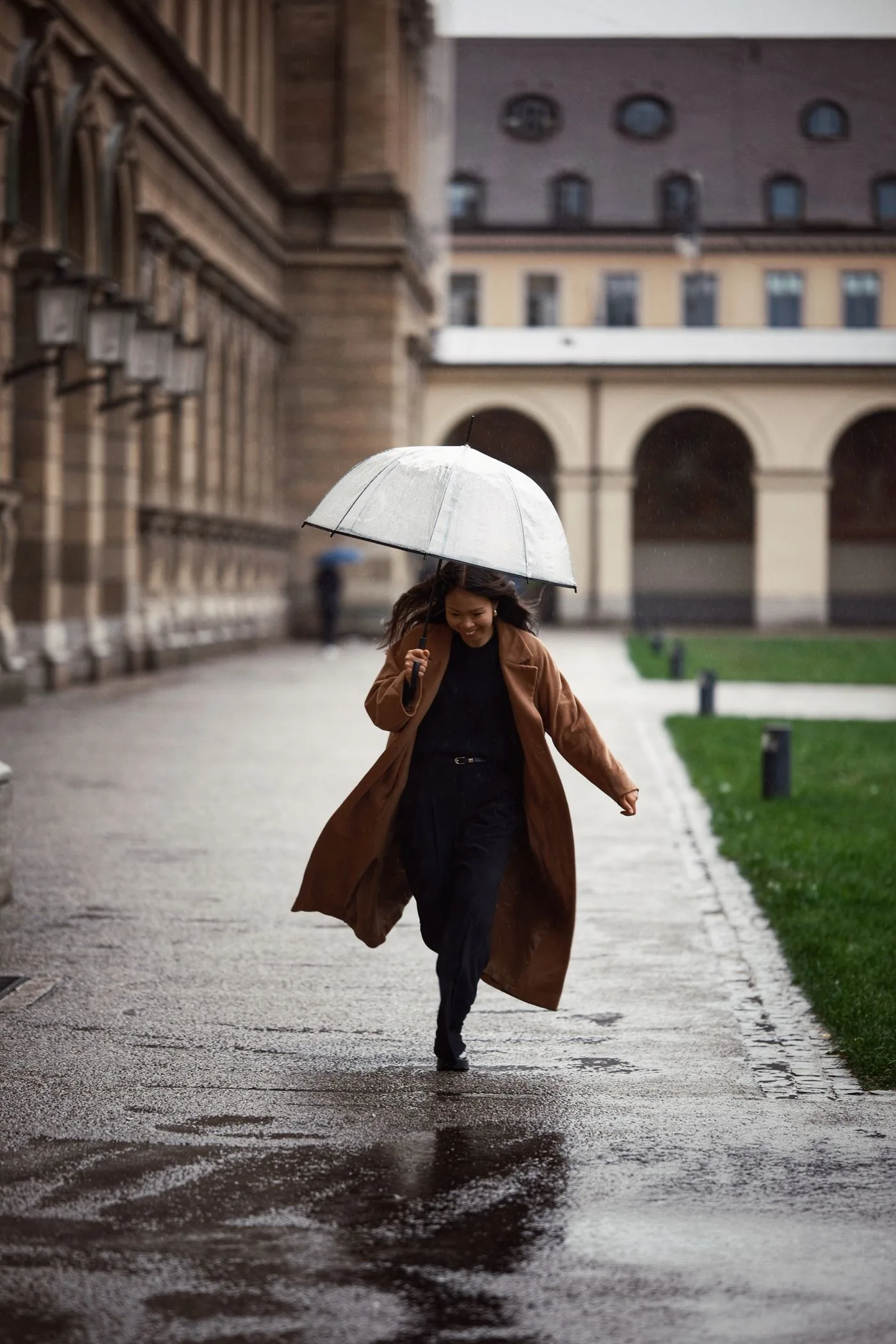
An umbrella outfit often gets imagined only while outside. Arrival brings another arrangement: the umbrella has its own next place, the coat may come off and the base clothing becomes visible. Plan those roles with the products you actually own. A useful indoor version keeps product guidance and the real setting central rather than borrowing a complete process from a rainy street photograph.
Choose the base independently
Select familiar clothing suited to the actual activity and your preference. Read relevant garment information and review ordinary readiness. The coat should not have to remain closed throughout the visit to make the clothing beneath it feel considered.
Try gentle sitting and standing in a suitable space. Keep unfinished care or a repair outside the ready-to-wear group. An attractive outdoor arrangement does not settle those separate questions simply because a layer conceals them.
Give the umbrella its own role
Read the umbrella’s product guidance for handling and temporary placement. Do not assume a coat hook, chair or bag component is suitable merely because it is available. Keep relevant setting instructions separate from assumptions about facilities you have not confirmed.
Preserve ownership in a shared space. Similar umbrellas can be nearby, and position may change while people arrive. An ordinary clear distinction can help without exposing unnecessary personal information or creating a complicated belongings record.
Keep the coat separate
Follow the coat’s relevant care and handling information. Travelling beside an umbrella does not make the two objects one care group. A coat pocket should not acquire an improvised storage role simply because it leaves your hands free.
Choose an appropriate temporary place for the coat consistent with its guidance and the setting. Keep included removable components identifiable. An unexplained belt left elsewhere can make the return sequence less clear even when the main garment is easy to recognise.
Review the arrival sequence
Think through collecting the bag, placing the umbrella appropriately and removing the coat in a manageable order. In a suitable space, review the ordinary dressing transition without creating an artificial test. A modest pause can be more useful than forcing an awkward bundle through the first imagined sequence.
If another person helps, explain the actual item and intended place or handle. Clear communication supports the practical arrangement. Do not expect someone else to infer different product roles from similar colours or a shared arrival time.
Preserve the complete outfit option
Look at the indoor base with the actual bag and familiar accessories. Record a useful combination if it served the activity, keeping any limitation specific to those pieces. Another day or setting may call for a different decision.
After returning home, follow the products’ respective appropriate care and storage guidance. A considered indoor version lets rainy-day dressing continue beyond the street view, keeping the real clothing, umbrella and belongings understandable through arrival, use and departure.
Continue planning with Rainy-Day Dressing Without Overcomplicating the Outfit, A Denim Jacket and a Base That Works without It.
Notes & further reading
Our styling suggestions are editorial guidance. Check the merchant’s size chart, fabric composition, care instructions and returns policy before buying.