Some links on Girl Wonder Life are affiliate links. We may earn a commission if you buy through them, at no extra cost to you. Recommendations are editorial guidance, not claims of hands-on testing. Read our disclosure.
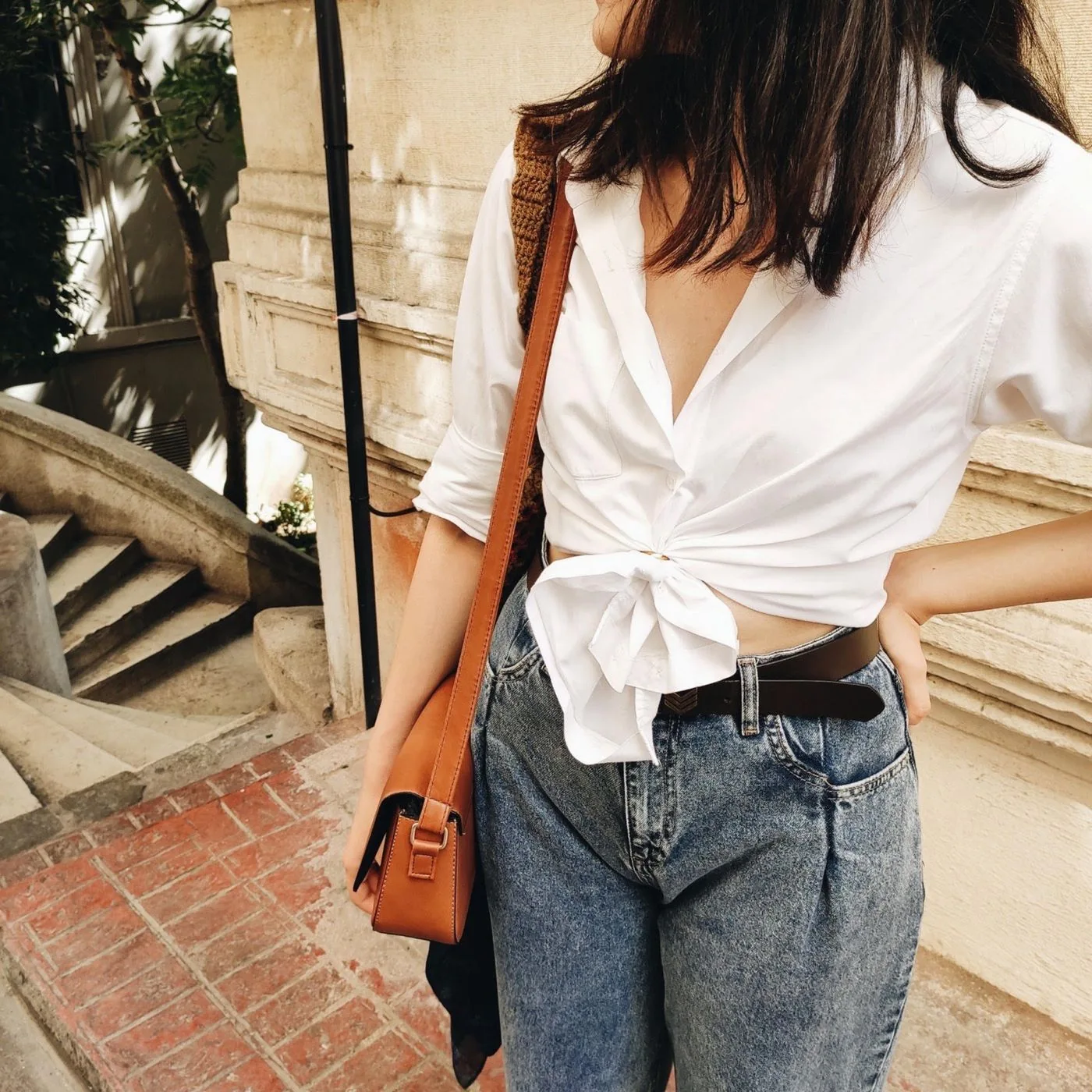
A white shirt worn over another top creates two visible colour areas rather than one. The opening determines how much of the base appears, while the shirt supplies a pale outer shape. Before changing the whole outfit, compare the ordinary states the actual garment allows. A small decision about the opening can clarify the combination without requiring another top, a new necklace or a completely different lower half.
Start with a complete base
Choose the top and lower garment you would be comfortable wearing indoors without the shirt. The outer piece should support that base rather than conceal an unresolved outfit beneath it. Keep the actual occasion and practical activities in mind.
Use garments according to their design and appropriate care information. A shirt with an unusual fastening or construction should not be forced into a state copied from another piece. Establish what the real garment permits rather than treating every photographed arrangement as an instruction.
Compare the visible opening
Look at the shirt in its normal open state and another appropriate state if useful. Keep the same base outfit and accessories. This makes it easier to see how the width and shape of the visible inner colour change the group.
A narrow dark area can create one effect, while a broader contrasting base can become the main detail. Describe what actually shows instead of assuming that one amount of contrast always looks more polished. The goal is a deliberate choice for these clothes.
Read the neckline and lower edge together
Notice how the opening relates to the base neckline and the visible waistband. A strongly detailed top may compete with the shirt's own collar, while a plain base can leave the outer line clearer. These are visual observations, not rules that make one category of top universally correct.
Include the ordinary hem state. A deliberate knot, tuck or loose front changes the shape and should be treated as part of the actual arrangement, not added silently between comparison pictures.
Keep movement separate from the reference
A still photograph can help remember the colour relationship but cannot establish comfort or how the layers behave throughout a day. Assess the actual garments appropriately during normal use. Avoid treating a preferred image as proof that a size or construction is suitable.
If a practical concern appears, identify it as a separate question rather than trying to hide it with another accessory. A clear outfit is not achieved by multiplying details around an unresolved wearing issue.
Save one usable combination
Record the shirt, base and ordinary opening state with the occasion it serves. There is no need to create a universal formula for all white shirts. A useful reference preserves a small decision that can be repeated, leaving the wardrobe easier to use and the visible colour areas intentional without turning an owned layer into the start of another shopping project.
Related reading
A Tank Neckline beneath a Front-Opening Layer, Choose a White Shirt You Will Actually Want to Wear.
Notes & further reading
Our styling suggestions are editorial guidance. Check the merchant’s size chart, fabric composition, care instructions and returns policy before buying.