Some links on Girl Wonder Life are affiliate links. We may earn a commission if you buy through them, at no extra cost to you. Recommendations are editorial guidance, not claims of hands-on testing. Read our disclosure.
A belt can solve a practical fit issue, add definition or provide a small focal point. Those are different jobs, and a belt bought for one may not do the others comfortably. Begin by trying the outfit without it. Notice what seems unfinished and whether a belt would actually help. Sometimes the missing detail is a tuck or a change of layer; sometimes a simple belt gives exactly the connection you wanted.
Separate fit from decoration
If trousers slip at the waist, consider whether the problem is small enough for a belt to address without bunching the fabric. A belt can adjust a little, but pulling substantial excess into folds may leave the trousers uncomfortable elsewhere. Check the fit seated and from behind. Alterations might be a more useful investment when the same pair repeatedly needs a strong correction.
For a decorative belt, decide where you want the visual line to sit. It might appear at a trouser waistband, over a dress or around an open layer. There is no compulsory position. Try a few placements and look at the complete silhouette. Choose one that stays comfortable when you move rather than a position that only works with your arms held still.
Work with the belt loops
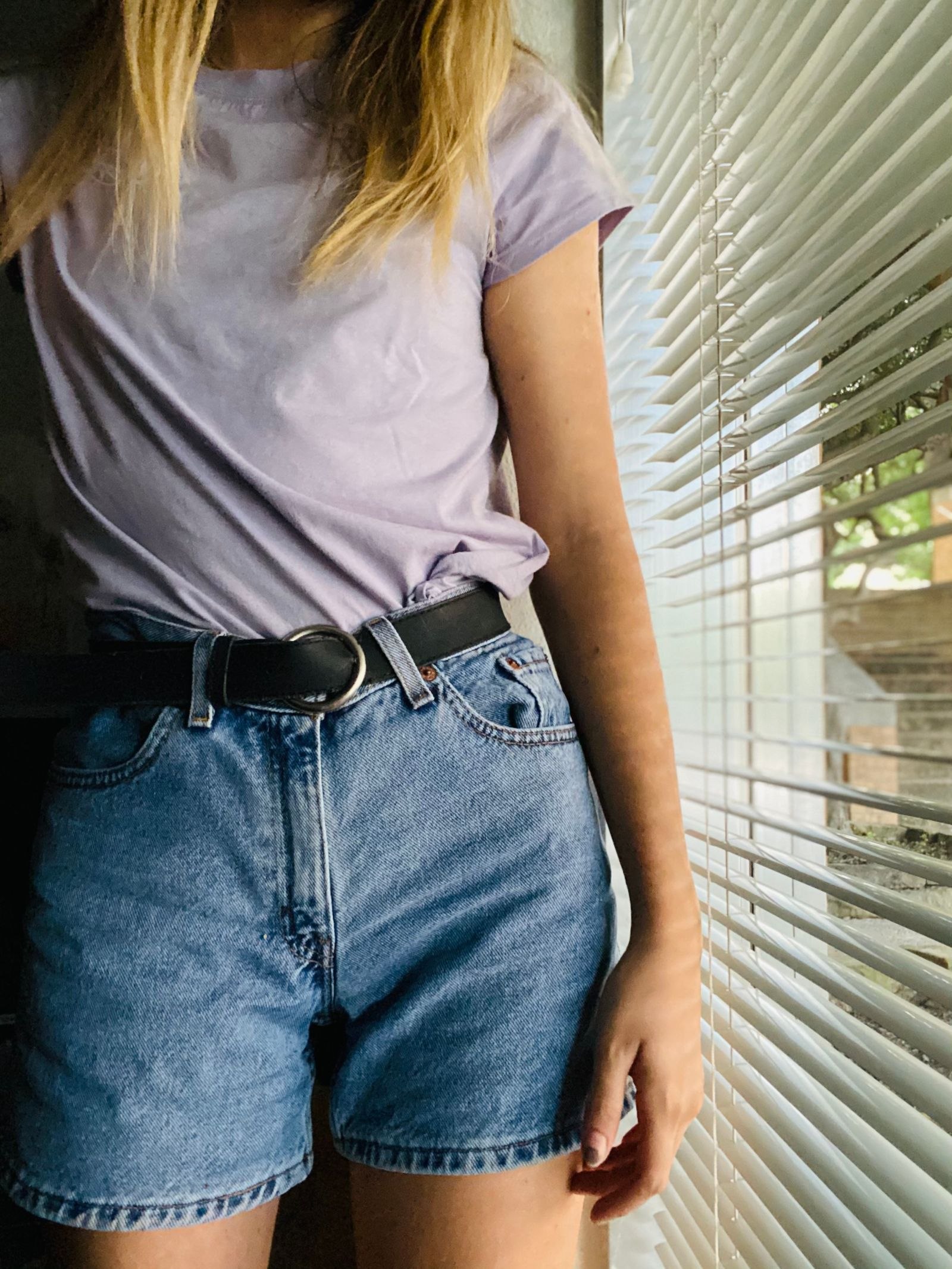
Measure the loops on trousers or jeans before shopping. A belt should pass through easily and allow the buckle to sit naturally. A wide design that technically fits may still feel bulky around the waistband. Check the thickness too, especially if you plan to wear the belt beneath a fitted knit. The visible outline can matter as much as the buckle itself.
Sizing conventions vary, so read the seller's measurement guidance. Check whether the listed length refers to the whole belt or the distance to a particular hole. Measure a belt you already wear comfortably at the intended position. A belt worn at the waist may need a different usable range from one sitting lower on jeans. Do not assume one measurement covers both.
Try it with a simple outfit
Start with jeans and a plain shirt. Compare a full tuck, a partial tuck and an untucked version before adding the belt. If the buckle becomes the focal point, you may prefer quieter jewelry or a simpler bag. That is an editing choice, not a requirement to remove personality. Let the details support the outfit you want rather than compete for your attention.
Color can connect pieces without matching them exactly. A brown belt might repeat a warm tone in shoes, while black can provide a clear line against denim. A belt close to the garment color creates a subtler effect. If you want a strong contrast, check that you enjoy the line across the whole outfit rather than just the belt viewed on its own.
Experiment with dresses and layers
A dress without loops needs a belt that stays where you want it. Walk, sit and reach to see whether it shifts or gathers the fabric awkwardly. Some dresses already have a strong waist seam or useful shape and gain little from another line. Others offer enough ease for a belt to create a different silhouette. Treat this as an experiment with your particular garment.
When belting a cardigan or jacket, check the outfit with the layer open and closed. Consider whether the belt prevents comfortable access to pockets or makes removing the layer cumbersome. A look that requires frequent readjustment may suit a short occasion but become annoying during errands. Build the combination around the length of time you realistically intend to wear it.
Buy for the repeated combination
Before ordering, identify two or three outfits that need the same width, color and usable length. If each outfit asks for something different, decide which one matters most. One well-chosen belt is more helpful than several approximate solutions. Look closely at the buckle closure, edge finishing and materials, then read care instructions rather than assuming all finishes tolerate the same treatment.
Check return terms and keep the belt free from wear marks during an indoor trial. Lay it beside your usual shoes and bags, but make the final decision while wearing the complete outfit. Accessories are small enough to invite impulse purchases; giving the belt a clear job makes the choice easier to assess.
Frequently asked questions
Must the buckle match my jewelry? No. You can repeat a metal tone for continuity or mix tones deliberately.
Does every tucked shirt need a belt? No. A clean waistband can look complete by itself.
Can one belt work over dresses and through jeans? Sometimes, if the width and adjustment range suit both. Verify the actual fit rather than relying on the category description.
Notes & further reading
Our styling suggestions are editorial guidance. Check the merchant’s size chart, fabric composition, care instructions and returns policy before buying.