Some links on Girl Wonder Life are affiliate links. We may earn a commission if you buy through them, at no extra cost to you. Recommendations are editorial guidance, not claims of hands-on testing. Read our disclosure.
An everyday shoe has to work beyond a photograph. It meets the pavement, sits beneath several different hems and affects how you move through an ordinary day. Before searching for a new pair, look at the shoes you regularly choose and the clothes you avoid because nothing seems to finish them. The useful purchase is often a connection between existing pieces rather than the most memorable shape in a shop.
Give the shoe a real job
Write down the situations you need it for: a walk to work, shopping followed by lunch, or a dinner that involves public transport. Estimate the walking involved and consider the surfaces you encounter. A shoe for short indoor occasions has a different job from one expected to handle a full day outside. Neither is a better purchase in isolation; its value depends on how often you actually have that kind of day.
Try planning three complete outfits around a potential pair. Include the trousers or skirt, a top, your usual outer layer and a bag. This reveals whether you want a genuinely versatile shoe or a specific finishing touch. A specific pair can be worthwhile, but knowing its limited role helps you decide how much wardrobe space and money to give it.
Test the actual fit
When trying shoes, wear socks or hosiery similar to those intended for daily use. Stand, walk and turn rather than judging them seated. Notice pressure across the toes, slipping at the heel and whether a fastening can adjust enough for you. Follow the retailer's fitting guidance and do not assume a marked size will feel identical across different designs. The shape matters as much as the number.
A shoe should not depend on an uncertain promise that discomfort will disappear. Materials can change with wear, but that does not make an unsuitable shape a sound choice. Compare another size or style if the fit is questionable. Check the return policy before wearing a purchase outside, and keep packaging while you make the decision. A careful indoor trial is easier than resolving a disappointing final sale.
Compare the hem and silhouette
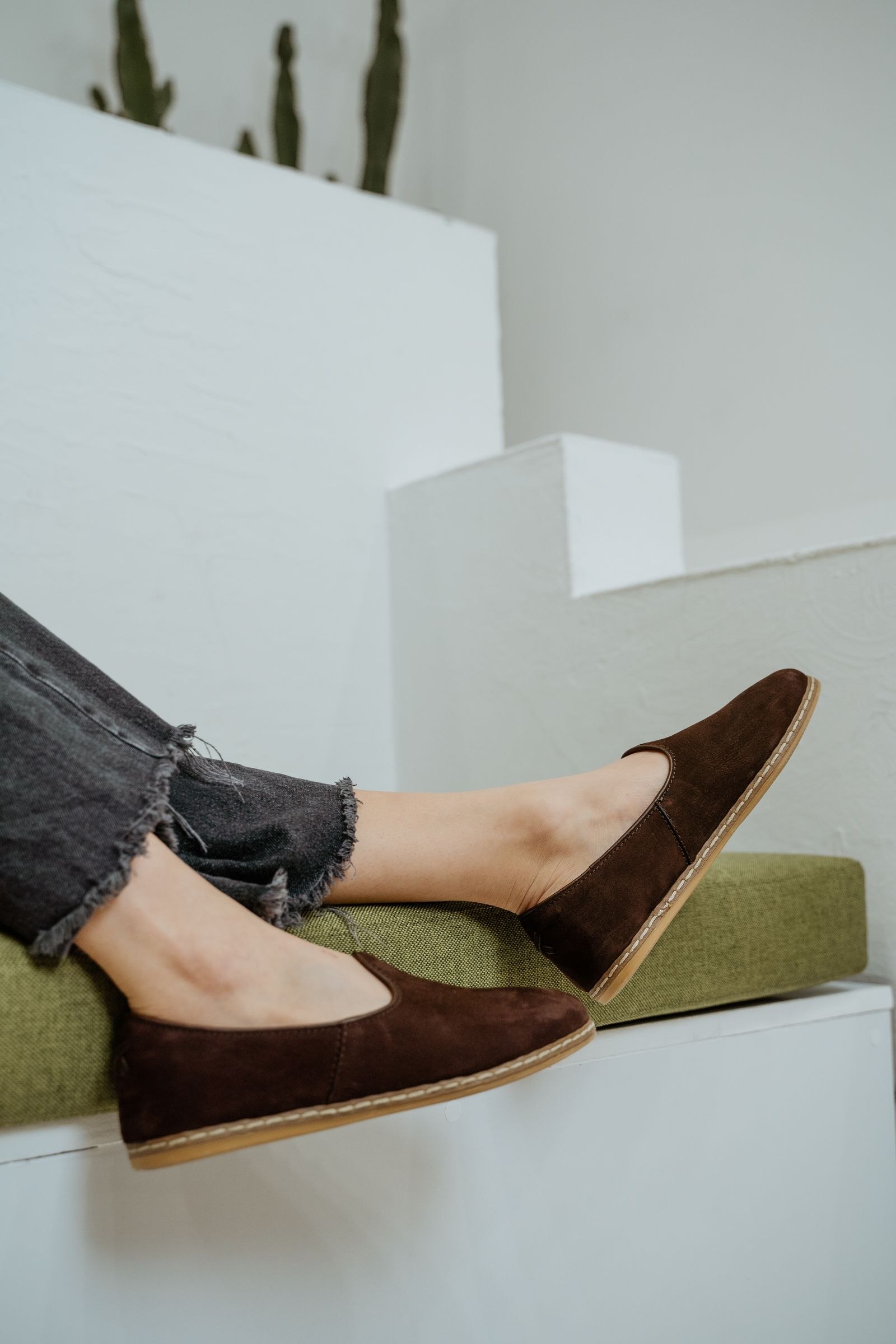
Wear the trousers you most want to pair with new footwear. Look at the hem from the front and side, then take a few steps. A wider leg may sit differently over a loafer than a narrow jean does. The question is whether you like that particular combination, not whether one shoe shape is universally correct for a trouser style. Small differences in length can change the whole impression.
If the shoe only works with an imagined alteration, include that alteration in the decision. Consider whether the trousers will still suit your other footwear afterward. Sometimes an existing pair needs a small adjustment; sometimes the proposed shoe solves fewer problems than expected. Avoid treating every awkward outfit as evidence that another purchase is required.
Let color support repetition
Choose a color that appears naturally in the outfits you want to repeat. Brown might connect a bag and warm knitwear; black might sit easily beneath darker trousers; a contrasting color might provide the focal point. Shoes and bags do not have to match exactly. Repeating a tone elsewhere is one option, while letting the shoe stand alone can work just as well.
Inspect practical details alongside appearance. Consider sole grip for your usual conditions, fastening access, weight and any care instructions. Ask whether a local repair service can handle the construction if repairability matters to you. Do not assume every leather shoe can be resoled or every fabric shoe can be machine washed. Read the product information rather than inferring care from appearance.
Make the final comparison
Put the candidate beside an existing pair that already works. What new outfit or useful situation does it enable? If the answer is only that it feels new, take time before deciding. A good everyday purchase earns its role through fit and repeated combinations. Photograph a few outfits during an indoor trial so you can judge the shoe in context rather than remembering only its display appeal.
Frequently asked questions
Do neutral shoes always offer more value? Only if those colors work with clothes you wear. A frequently used bright pair can be more useful than an untouched neutral one.
Should I buy a second pair of a favorite style? Consider condition, future needs and storage first. A duplicate is useful only when it has a realistic role.
Notes & further reading
Our styling suggestions are editorial guidance. Check the merchant’s size chart, fabric composition, care instructions and returns policy before buying.